Water Heater Repair in Arverne, Queens
Prompt troubleshooting for gas, electric, and boiler-connected indirect water heaters across the Rockaway Peninsula. Restoring consistent hot water and resolving tank leaks.
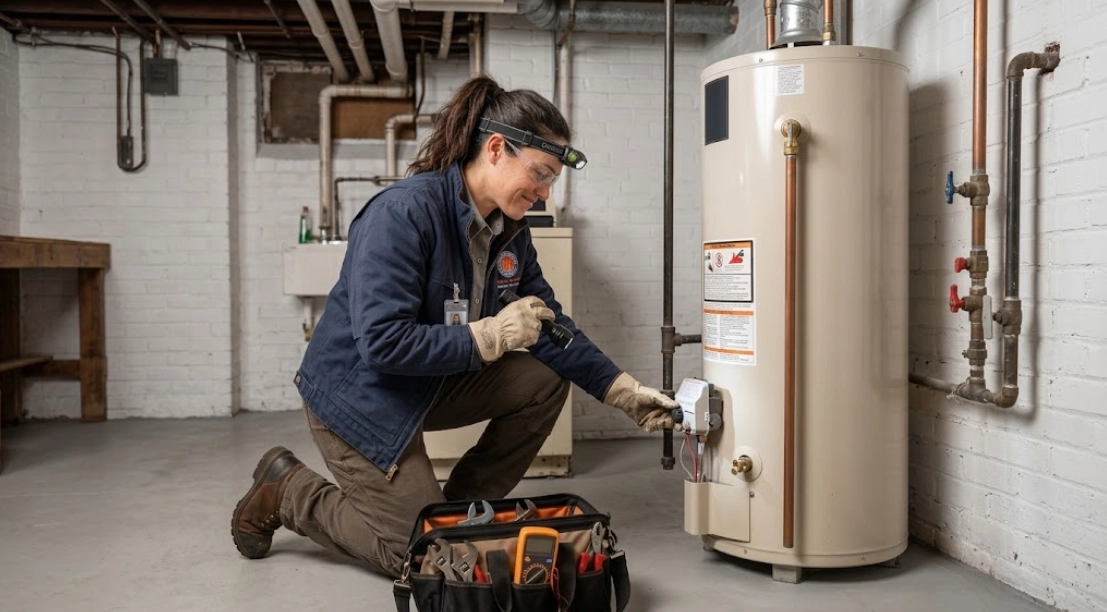
Restoring Domestic Hot Water in Arverne Homes
A sudden loss of hot water disrupts morning routines, laundry, hygiene, and household sanitation. When showers turn unexpectedly ice cold, property owners in need of reliable water heater repair Arverne Queens require prompt technical diagnosis. Water heating appliances in our coastal Queens neighborhood endure high usage demands alongside mineral sediment and fluctuating coastal water pressure.
Whether your property operates a standalone atmospheric atmospheric gas tank, an electric storage unit, or an indirect domestic hot water tank piped directly to your central heating system, identifying the exact failure mechanism is essential. If you face a frustrating no hot water repair Arverne Queens situation, an actively dripping fitting, or water temperature fluctuations, professional troubleshooting ensures safe restoration of your hot water supply.
Troubleshooting Gas vs. Electric Water Heaters
While both systems store heated water under municipal line pressure, their heating elements and diagnostic requirements differ entirely:
Gas Water Heater Diagnostics
For homes requiring gas water heater repair Arverne Queens, common failure points involve the fuel supply train and venting. Electronic spark igniters or standing pilots can be snuffed out by dirty pilot orifices or failing thermocouples. Gas control valves with faulty internal thermostats can fail to open the main burner orifice. Furthermore, blocked flue baffles or inadequate draft can trigger thermal cutoff switches that lock out the burner.
Electric Water Heater Diagnostics
For properties utilizing electric water heater repair Arverne Queens, problems center around high-voltage electrical components. Dual-element tanks feature upper and lower electric immersion elements regulated by separate thermostats. A tripped high-limit reset switch on the upper thermostat immediately cuts power to both elements. Burnt heating elements or grounded wiring result in completely cold water or rapidly depleted capacity.
Indirect Water Heaters Connected to Boilers
Many homes in Arverne heat domestic water via indirect storage tanks or tankless coils connected directly to the primary home heating plant. Understanding how these integrated systems operate prevents misdiagnosing a heating boiler issue as a water heater defect:
- Indirect Storage Tanks: An indirect tank functions as a dedicated heating zone. When the tank's internal aquastat calls for heat, it triggers the central boiler burner and starts a dedicated circulator pump that routes hot boiler water through an internal coil inside the tank. If domestic water stays lukewarm, the issue may involve a failing circulator, airlock in the heat exchanger loop, or an unseated zone check valve.
- Internal Tankless Boiler Coils: Older boilers feature copper coils submerged directly in the boiler water. Over years of service, mineral scale coats the exterior coil fins or interior passages, restricting heat transfer and cutting hot water volume.
Because indirect water heaters rely on central heating loops, repairs frequently interface with our primary boiler repair in Arverne or broader boiler replacement engineering.
Diagnosing a Leaking Water Heater: Repair vs. Replacement
Discovering water pooling beneath your appliance is a primary concern. When evaluating a water heater leaking Arverne Queens, an accurate inspection determines whether a targeted repair is possible or if full tank replacement is necessary:
Serviceable External Leaks
Water discharge from the Temperature and Pressure (T&P) relief valve indicates either excessive system pressure (requiring a thermal expansion tank or pressure reducing valve) or a defective valve seat. Similarly, leaking dielectric unions, corroded brass nipples on top of the tank, or a loose bottom drain spigot can be repaired or replaced without discarding the water heater.
Internal Tank Ruptures
Standard tank water heaters are constructed of steel with an interior glass porcelain lining protected by a sacrificial anode rod. Over time, mineral corrosion depletes the anode rod, allowing hot water to attack the steel shell. Once water begins seeping through the outer jacket seams or bottom plate, the internal tank has ruptured and cannot be patched. Immediate replacement is required.
Sediment Accumulation, Flushing, and Safety Protocols
Water heaters naturally accumulate heavy calcium, lime, and sand sediment over time. When sediment settles across the bottom of a gas water heater, it forms an insulating barrier between the burner flame and the water, causing popping noises, slower recovery times, and overheating of the bottom steel head. On electric tanks, sediment buries the lower element, causing rapid burnout.
Critical Scalding & Thermal Expansion Precautions
Water heaters must never be set above recommended residential temperature thresholds (typically 120°F / 49°C) to prevent severe scalding burns, especially for young children and elderly residents. Additionally, modern closed-loop plumbing systems with backflow preventers require a properly charged thermal expansion tank to prevent extreme hydrostatic pressure spikes that damage plumbing fixtures and rupture water heater tanks.
To ensure total plumbing protection in coastal basements, explore our sump pump and flood protection services. To check service availability across Queens, visit our service areas page or reach our team via our contact page.
Frequently Asked Questions About Water Heater Repair
Answers to common domestic hot water issues in Arverne.
Why is my water heater leaking water from the bottom of the tank?
It is critical to distinguish between external fittings and internal tank failure. Water pooling beneath the unit may originate from a leaking temperature and pressure (T&P) relief valve, loose threaded pipe nipples at the top, or a leaking drain valve. However, if water is weeping directly through the steel jacket seams or bottom seam, the internal glass lining has breached and the entire water heater must be replaced.
What causes a gas water heater pilot light to repeatedly go out?
Repeated pilot outages are usually caused by a defective thermocouple or millivolt thermopile that fails to produce the electrical current needed to hold open the internal gas valve safety magnet. Other frequent culprits include a dirty pilot orifice restricting gas flow, a blocked flame arrestor screen at the bottom of the combustion chamber, or drafts caused by negative air pressure in the basement.
How does an indirect water heater work with my central heating boiler?
An indirect water heater is a heavily insulated storage tank that does not contain its own gas burner or electric heating elements. Instead, hot boiler water is piped through an internal high-surface-area heat exchanger coil inside the tank, transferring heat to your domestic water. It functions as a separate heating zone controlled by an internal aquastat and dedicated circulator pump.
Why does my hot water run out much faster than it used to?
Rapid hot water depletion is commonly caused by a cracked or broken dip tube inside the tank. The dip tube directs incoming cold municipal water to the bottom near the heating source. When it snaps, cold water mixes directly with hot water at the top outlet, delivering lukewarm water. On electric units, a burnt-out lower heating element also cuts hot water recovery capacity in half.
Restore Reliable Hot Water to Your Home
Reach our telephone dispatch desk to describe your water heater symptoms and arrange expert technical repair in Arverne, Queens.
Call (315) 202-8009